Headaches are one of the most common health problems people experience. They can appear suddenly, ruin productivity, and make even simple tasks feel difficult. Whether caused by stress, dehydration, lack of sleep, sinus pressure, or screen fatigue, learning how to get rid of a headache quickly can help you feel better and get back to your day. Some headaches are mild and disappear with rest, while others may require a more targeted approach.
Understanding the cause of your discomfort is the first step. Once you know what may be triggering the pain, you can choose the best method for relief. In this guide, we will explore natural remedies, fast solutions, and practical ways to reduce headache symptoms effectively.
Common Reasons Why Headaches Happen
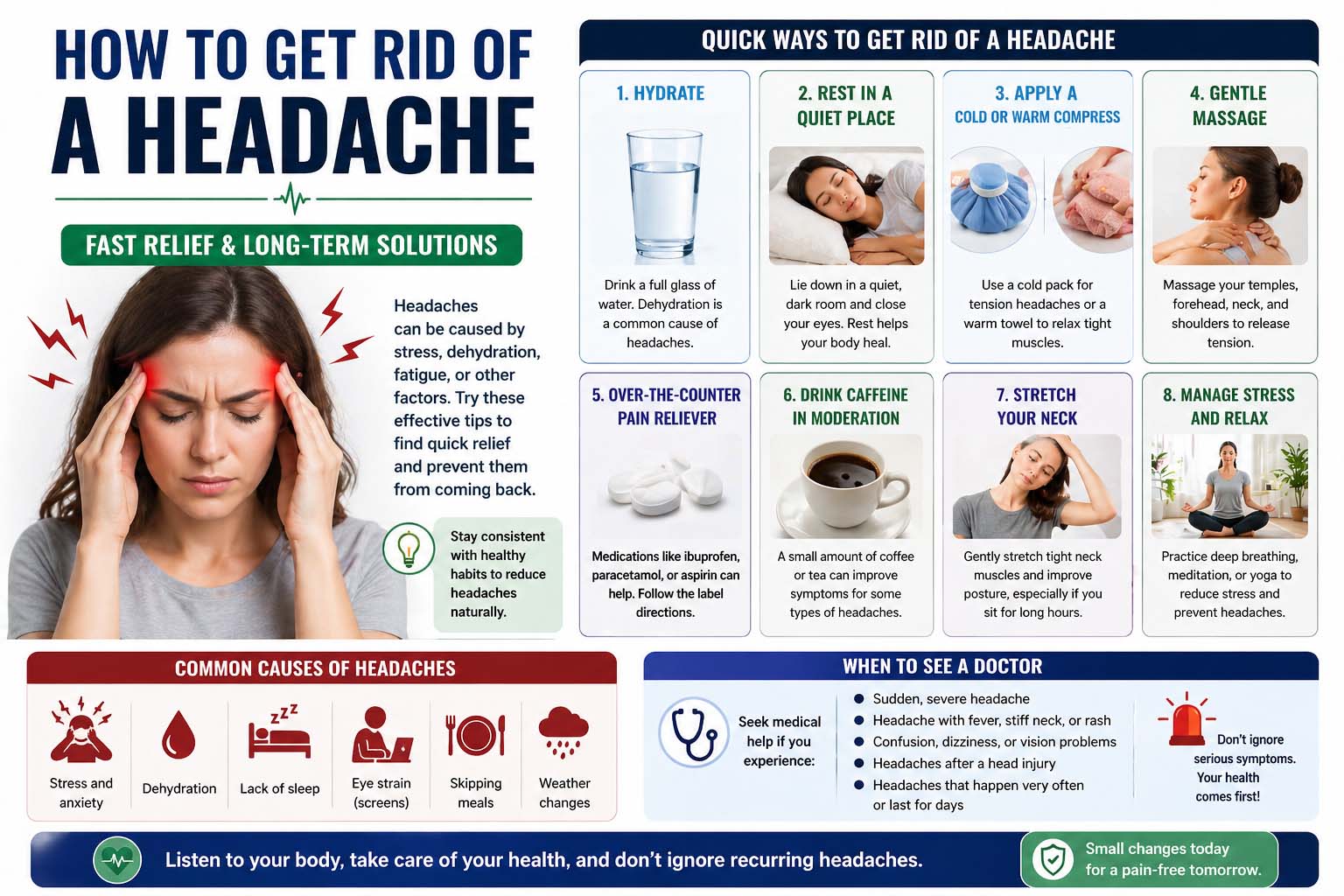
Before trying treatments, it helps to know why headaches occur. Tension headaches often come from stress, anxiety, or tight muscles in the neck and shoulders. Migraines may be linked to hormonal changes, certain foods, bright lights, or genetics. Meanwhile, sinus headaches are usually caused by congestion and inflammation in the sinus cavities. Dehydration headaches happen when the body lacks enough fluids.
Many people also experience headaches from staring at screens too long, skipping meals, or poor posture. Therefore, identifying these triggers can make it easier to prevent future pain and understand how to get rid of a headache more effectively.
Fast Sinus Pressure Relief
If pressure around the eyes, cheeks, or forehead is causing pain, sinus congestion may be the problem. Many people search for instantly because the discomfort can feel intense and distracting.
One of the fastest ways to relieve sinus pressure is steam inhalation. Breathe in warm steam from a shower or bowl of hot water to help loosen mucus and open nasal passages. Additionally, applying a warm compress over the face can reduce pressure. Drinking warm tea or water helps thin congestion. Saline nasal sprays may also provide quick moisture and support drainage.
Resting with your head slightly elevated can prevent pressure from building. If allergies are the cause, removing yourself from triggers such as dust or pollen may bring rapid relief.
Hydration and Food for Headache Relief
Sometimes headaches are a sign that the body needs water or nutrients. If you have not had enough fluids, drink a glass of water slowly and continue hydrating throughout the day. Electrolyte drinks can also help after sweating or illness. Readers interested in hydration habits can explore the benefits of drinking warm water.
Low blood sugar can also trigger headaches. For example, eating a balanced snack such as fruit, yogurt, nuts, or whole grains may reduce pain. Caffeine can help some people in small amounts, especially for tension headaches, but too much caffeine may worsen headaches later.
Overall, simple adjustments like hydration and nutrition are often overlooked but are essential when learning how to get rid of a headache naturally.
How to Get Rid of a Headache in 2 Minutes
When pain hits suddenly, people often want immediate relief. While no solution works for everyone, there are quick strategies for how to get rid of a headache in 2 minutes or at least reduce the intensity fast.
First, close your eyes and take slow, deep breaths. Relax your jaw, shoulders, and neck. Tension headaches often improve when the body relaxes. Next, massage your temples gently in circular motions. Pressing the area between your thumb and index finger for a few seconds may also help some people.
Move to a quiet, dark room if bright light or noise is making symptoms worse. Additionally, splashing cool water on the face or using a cold pack on the forehead can calm pain quickly. These fast methods may not cure every headache, but they often provide short-term relief.
How to Get Rid of a Sinus Headache
If sinus headaches happen often, longer-term treatment may be needed. Knowing how to get rid of a sinus headache includes treating both pain and congestion. Staying hydrated, using a humidifier, and rinsing nasal passages with saline can improve sinus function. Readers can also learn more about the benefits of humidifier use.
Warm compresses and gentle facial massage may help drainage. Over-the-counter pain relievers may reduce discomfort, but it is important to use them as directed. However, if sinus headaches come with fever, thick mucus, or symptoms lasting many days, a doctor may need to check for infection or allergies.
Ultimately, managing the underlying sinus issue is usually the best path to lasting relief.
Rest and Sleep Matter More Than You Think
Fatigue is a major cause of headaches. Poor sleep habits can increase stress hormones, tension, and sensitivity to pain. If you often wake up with headaches, consider your sleep routine. For example, try going to bed at the same time each night, reducing screen use before sleep, and keeping the room dark and cool.
There are times when you need quick relief before work, school, or an important event. If you need to know, combine several strategies at once. Drink water, rest your eyes, stretch your neck, and apply a cold compress. Additionally, reduce noise and bright light around you.
When to Seek Medical Help
Most headaches are harmless and temporary, but some require medical attention. Seek help immediately if you experience a sudden severe headache unlike any before, weakness, confusion, trouble speaking, fainting, fever with stiff neck, or headache after a head injury. Frequent headaches that interfere with daily life should also be evaluated.
People who notice that their head hurts when I cough may need medical advice if the pain is severe, persistent, sudden, or accompanied by other warning signs.
Long-Term Prevention Habits
Prevention is often easier than treatment. Regular exercise, hydration, stress management, and consistent sleep.
Conclusion
Learning how to get rid of a headache starts with understanding the cause. Whether it is stress, dehydration, sinus pressure, or lack of sleep, the right remedy can provide fast relief.